Keynote Speakers
Keynote Speakers
TBA


Professor Zoran Obradovic
Laura H. Carnell Professor of Data Analytics, Data Analytics and Biomedical Informatics Center, Computer and Information Sciences Department, Statistics Department, Temple University
Title: Modeling Interactions in Temporal Multiplex Networks
Abstract: This presentation will discuss our machine learning approaches for identifying, categorizing, and forecasting events of interest from limited data and imprecise labels. This is accomplished by integrating structured and unstructured multimodal information and jointly modeling multiple types of interactions within temporal multilayer networks.
Our findings indicate that a learning framework that integrates information from various sources of differing quality and resolution can significantly enhance informed decision-making.
Short Bio: Zoran Obradovic is a Distinguished Professor and a Center director at Temple University, an Academician at the Academia Europaea (the Academy of Europe), and a Foreign Academician at the Serbian Academy of Sciences and Arts. He mentored about 50 postdoctoral fellows and Ph.D. students, many of whom have independent research careers at academic institutions (e.g., Northeastern Univ., Ohio State Univ.) and industrial research labs (e.g., Amazon, eBay, Facebook, Hitachi Big Data, IBM T.J.Watson, Microsoft, Yahoo Labs, Uber, Verizon Big Data, Spotify). Zoran is the editor-in-chief of the Big Data journal and the steering committee chair for the SIAM Data Mining conference. He is also an editorial board member of 13 journals and was the general chair, program chair, or track chair for 11 international conferences. His research interests include data science and complex networks in decision support systems, addressing challenges in big, heterogeneous, spatial, and temporal data analytics, motivated by applications in healthcare management, power systems, earth sciences, and social sciences. His studies were funded by AFRL, DARPA, DOE, NIH, NSF, ONR, PA Department of Health, US Army ERDC, US Army Research Labs, and industry. He has published 480 articles and has been cited more than 37,000 times (H-index 70). For details, see http://www.dabi.temple.edu/zoran-obradovic

Professor Antonis Argyros
Professor, Computer Science Department, University of Crete
Affiliated Research Fellow, Institute of Computer Science, FORTH
Title: Seeing Humans Through AI: Advances in Human-Centered Computer Vision
Abstract: Human-Centered Computer Vision (HCCV) is a rapidly evolving research domain at the intersection of computer vision and artificial intelligence, focusing on the observation and interpretation of humans and their interactions through visual data. In this talk we will present key contributions from our research group on the HCCV research landscape, highlighting computational methods for modeling and understanding aspects of human presence such as body pose, hand articulation, facial expressions, gestures, activities, and social interactions. We will showcase state-of-the-art systems for real-time human tracking, interaction analysis, and semantic scene understanding. We will also discuss recent advances in 3D human pose and shape estimation, visual-linguistic modeling for action anticipation, and sensing humans in context using multi-modal approaches. The presentation will also discuss applications of the developed technologies that span healthcare, robotics, ergonomics, digital culture, and entertainment, demonstrating the transformative potential of HCCV.
Short Bio: Antonis Argyros is a Professor in the Computer Science Department at the University of Crete and a senior researcher at the Institute of Computer Science (ICS), Foundation for Research and Technology–Hellas (FORTH), Heraklion, Crete where he heads the Human-Centered Computer Vision (HCCV) group. His work is focused on developing AI-driven computer vision methods that accurately perceive and interpret human presence, covering human pose and shape, hand articulation, facial analysis, gestures, actions, activities and intentions.
He earned his B.Sc. (1989), M.Sc. (1992), and Ph.D. (1996) in Computer Science from the University of Crete, followed by a postdoctoral position at the Computational Vision and Active Perception Lab at KTH, Stockholm. Since then, he has authored over 250 scientific publications in leading journals and conferences such as CVPR, ICCV, ECCV, and IEEE PAMI, and his work has received international recognition through awards and over 70 invited and keynote presentations at international venues. He has held leadership roles in major conferences and organizations, including General Co-Chair of ECCV 2010 and Program Co-Chair of IEEE FG 2020, and multiple editorial and technical program positions. He maintains strong collaborations with academic and industrial partners worldwide and has strong involvement in numerous European and national research projects.
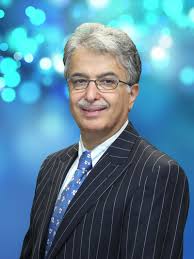
Professor Hojjat Adeli
Ohio State University, Columbus, USA
Fellow of the Institute of Electrical and Electronics Engineers (IEEE)
Honorary Professor, Southeast University, Nanjing, China
Member, Polish and Lithuanian Academy of Sciences
Elected corresponding member of the Spanish Royal Academy of Engineering.
Title: TBA
Abstract: TBA
Short Bio: Hojjat Adeli received his Ph.D. from Stanford University in 1976 at the age of 26. He is currently an Academy Professor at The Ohio State University where he held the Abba G. Lichtenstein Professorship for ten years. He is the Editor-in-Chief of the international journals COMPUTER-AIDED CIVIL AND INFRASTRUCTURE ENGINEERING which he founded in 1986 and INTEGRATED COMPUTER-AIDED ENGINEERING which he founded in 1993. He has also served as the Editor-in-Chief of the INTERNATIONAL JOURNAL OF NEURAL SYSTEMS since 2005. He has been an Honorary Editor, Advisory Editor, or member of the Editorial Board of 144 research journals. He has authored over 600 research and scientific publications in various fields of computer science, engineering, applied mathematics, and medicine, including 16 ground-breaking high-technology books. He is the recipient of over sixty awards and honors including three Honorary Doctorates from Lithuania, Spain, and Italy, and Honorary Professorship at several Asian and European Universities. He is a member of Academia Europaea, a corresponding member of the Spanish Royal Academy of Engineering, a foreign member of Lithuanian Academy of Sciences and Polish Academy of Science, a Distinguished Member of American Society of Civil Engineers (ASCE), and a Fellow of AAAS, IEEE, AIMBE, and American Neurological Association. He was profiled as an /Engineering Legend/ in the journal /Leadership and Management in Engineering/, ASCE, April 2010, by a noted biographer of legendary engineers.

Professor Anastasios Tefas
Department of Informatics, Aristotle University of Thessaloniki
Title: AI for Trustworthy Autonomous systems: From reactive machines to reasoning agents
Abstract: Most current AI powered autonomous systems rely almost exclusively on fast, intuitive reactive processing, that is pattern recognition from large datasets, while lacking the deliberate reasoning needed for planning, adaptation, and trustworthy decision making. This imbalance limits adaptability, safety, and explainability in dynamic, real world environments. In this talk recent advances in General Purpose AI for robotics that integrate reactive efficiency with deliberate analytical capabilities, both in inference and learning will be presented. This enables autonomous systems to estimate confidence levels and detect anomalies while maintaining fast reactive behavior, escalate to advanced sophisticated behavior when needed, plan over long horizons, adapt to domain shifts, and make explainable and trustworthy decisions aligned with European values and the AI Act.
Short Bio: Anastasios Tefas received the B.Sc. in informatics in 1997 and the Ph.D. degree in informatics in 2002, both from the Aristotle University of Thessaloniki, Greece. Since 2022 he has been a Professor at the Department of Informatics, Aristotle University of Thessaloniki.
From 2008 to 2022, he was a Lecturer, Assistant Professor, Associate Professor at the same University. Prof. Tefas participated in 25 research projects financed by national and European funds, while currently he is the coordinator of the project Energy Efficient and Trustworthy Deep Learning – DeepLET. He is Area Editor in Signal Processing: Image Communications journal. He has co-authored more than 170 journal papers, more than 300 papers in international conferences and contributed 17 chapters to edited books in his area of expertise. He has co-organized more than 15 workshops, tutorials, special sessions and special issues and has given more than 20 invited talks. He has co-edited the book “Deep Learning for Robot Perception and Cognition”, Elsevier, 2022. Over 12000 citations have been recorded to his publications and his H-index is 59 according to Google scholar. His current research interests include computational intelligence, deep learning, pattern recognition, machine learning, digital signal and image analysis and retrieval, computer vision and robotics.
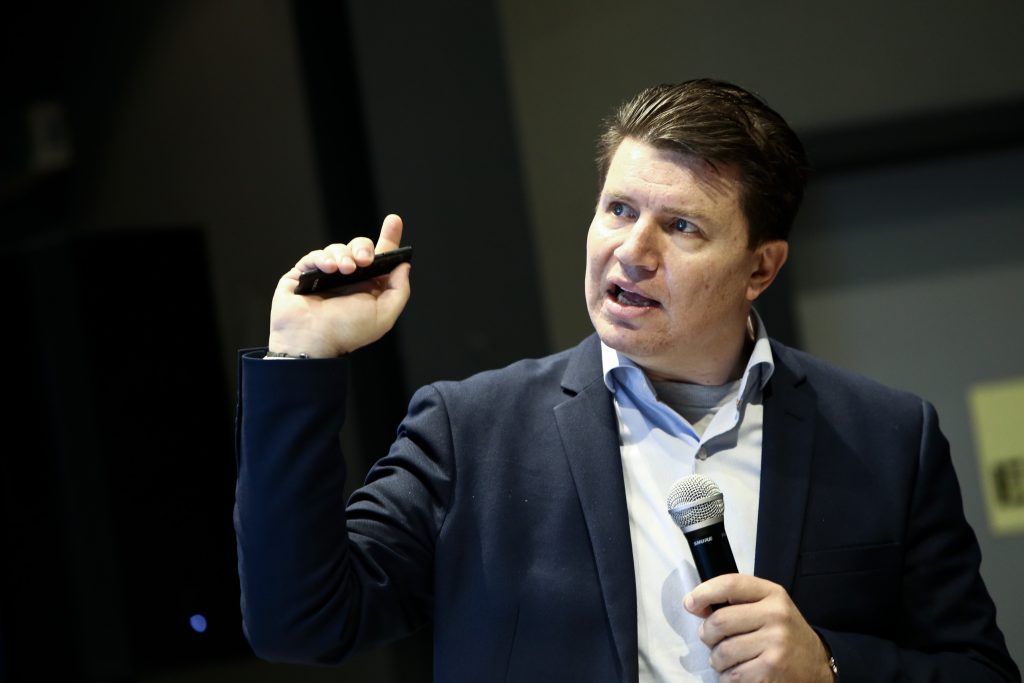
Professor John Soldatos
Honorary Research Fellow, The University of Glasgow, UK
Title: From Language Models to Autonomous Agents: Evolutionary Trajectories and Industrial Transformations in AI-Driven Systems
Abstract: The rapid evolution of Large Language Models (LLMs) and AI agents is currently redefining the boundaries of AI: It enables unprecedented automation and decision-making capabilities in complex domains. This talk examines the architectural and algorithmic milestones in LLM development, from transformer-based foundations to today’s multi-agent frameworks which are capable of collaborative reasoning.
Drawing on case studies in finance (e.g., real-time risk assessment, stock selection) and industrial automation (e.g., asset maintenance, industrial training, and human-robot collaboration), the talk highlights how LLMs transition from passive tools to proactive, context-aware agents. The practical contributions of the talk include novel architectures for solving complex problems with LLMs and AI agents, while considering the need for ethical governance frameworks to address bias, transparency, and accountability.
The presentation concludes with a presentation of emerging challenges—such as energy efficiency, domain adaptability, and trust calibration—while proposing interdisciplinary pathways to bridge theoretical AI advancements with industrial scalability.Overall, this keynote will synthesize empirical results from EU-funded projects (e.g., XR5.0, HumAIne, MOSAICO) and industry partnerships in order to introduce ideas for engineering robust, ethically grounded AI systems for the next decade.
Short Bio: John Soldatos holds a PhD in Electrical & Computer Engineering from the National Technical University of Athens (2000) and is Senior R&D Consultant and Innovation Delivery Specialist with INTRASOFT International (2020-present) and Honorary Research Fellow at the University of Glasgow, UK (2014-present). He was a Professor and Head of the Internet of Things (IoT) Group at the Athens Information Technology (AIT), Greece (2006–2019), and Adjunct Professor at the Carnegie Mellon University, Pittsburgh, PA (2007–2010). He has experience in working closely with various large multi-national industries as R&D consultant, while being partner and scientific advisor to high-tech startups. He has played a leading role in the delivery of more than 70 (industrial, R&D, consulting) projects, for both private & public sector organizations.